The 30-Minute Floor Test That Saves You From Buying the Wrong Area Rug
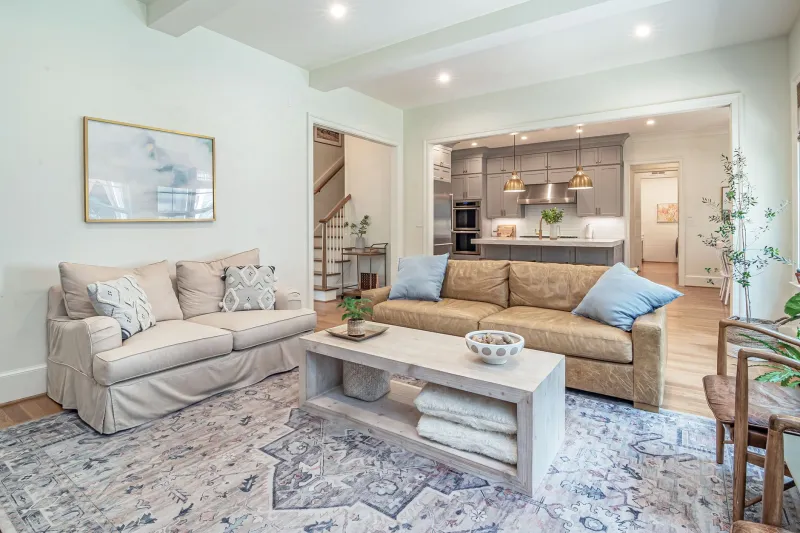
There’s a moment in every living room makeover when the sofa is right, the paint is right, and something still feels off. Usually it’s the rug. Not the color. Not the pattern. The size. A rug that’s a little too small makes a room feel like the furniture is waiting for a bus—close together, but not quite connected. The good news is you can catch that mistake before you buy, using a roll of painter’s tape and a half hour on your hands.
Why the Rug Is the Quiet Backbone of the Room
A rug does more than soften the floor. It draws a boundary around the conversation area, pulls colors together, and tells the eye where the room begins and ends. When the rug is undersized, the sofa, chairs, and coffee table look like they’re floating in separate zones. When it’s the right size, even a mix of hand-me-down furniture feels intentional.
The most common mistake in US living rooms is choosing a rug that fits the empty floor space instead of the furniture arrangement. A 5x8 rug can look generous in a store aisle, but in a 12x18 living room it often becomes a postage stamp under the coffee table. In many average living rooms, 8x10 is the practical starting point. Larger rooms usually need 9x12. Apartments and smaller spaces can make an 8x10 work, but only if the furniture is scaled accordingly.
The 30-Minute Floor Test, No Purchase Required
This is the part that saves you from buyer’s remorse. You don’t need to order three rugs and return two. You need to see the size on your actual floor.
What you’ll need
- Painter’s tape
- Kraft paper, packing paper, or flattened cardboard boxes
- A measuring tape
- Scissors
- Your phone camera
Step 1: Mark the room’s main walkways
Before you mark the rug, mark the paths people actually use. Tape a line from the doorway to the kitchen, from the sofa to the hallway, and anywhere a pet or a kid cuts through. This keeps you from buying a rug that turns your living room into an obstacle course.
Step 2: Tape a rectangle on the floor
Start with an 8x10 rectangle, or 9x12 if your room is large. Use painter’s tape to outline the exact dimensions. Painter’s tape is the renter’s best friend here—it lifts cleanly from hardwood, tile, and most vinyl, and it gives you a real sense of scale without committing to anything.
Step 3: Add cardboard furniture footprints
If moving the sofa is a hassle, cut cardboard templates for the sofa, chairs, and coffee table. Slide them into place over the tape outline. The goal is to see how much rug extends beyond each piece. If the tape rectangle disappears under the furniture, the rug is too small. If there’s a wide sea of bare floor between the rug edge and the sofa, it’s probably too big or the furniture needs to move inward.
Step 4: Sit in the room
Sit where you normally sit. Walk the path from the door. Check whether a chair catches on the tape edge when you pull it out. Look at the room from the doorway, because that’s the view guests get first. Photograph it from eye level and from the doorway. The camera is honest in a way our brains are not.
Step 5: Live with it for an hour
Leave the tape down for at least an hour. Make a cup of coffee. Come back. You’ll know quickly whether the size feels calm or cramped.
The Furniture-Leg Rules, Simplified
Rug sizing rules can sound fussy, but they boil down to one idea: the rug should connect the furniture, not just sit under the coffee table.
- Living room: At minimum, the front legs of every major piece—sofa and chairs—should sit on the rug. In a larger room, aim for all legs on the rug. The rug should extend at least 6 to 8 inches beyond the sofa on each side.
- Coffee table: The table should sit fully on the rug, with roughly 18 to 24 inches between the table and the sofa. The rug should extend 12 to 18 inches beyond the table.
- Walkways: Leave 12 to 18 inches of bare floor around the rug’s edges where people walk. This keeps the room from feeling wall-to-wall carpeted by accident.
- Doorways: Tape the door swing before you buy. A thick rug can stop a door from opening fully, and that’s a headache you don’t need.
Three Measurements to Write Down Before You Shop
- The width and depth of your furniture footprint, including the front legs.
- The narrowest walkway you need to keep clear.
- The distance from the sofa front to the wall or media console.
Bring those numbers with you. Don’t trust the label “standard living room.” Rooms in the US vary wildly, especially in older homes and apartments.
Budget Sources That Don’t Look Budget
A well-sized rug from a modest source will always beat an expensive rug that’s too small. Washable rug brands have made stain-friendly styles much more accessible in recent years, and big-box stores now carry convincing low-pile options. IKEA, HomeGoods, and estate sales are still reliable for affordable sizes. Local carpet shops will often bind a remnant into a custom rug for less than a designer lookalike, which is a smart route for odd-shaped rooms.
Layering is another budget fix. Put a smaller patterned rug over a larger sisal or jute rug. You get the visual size you need without paying for a giant statement piece. Just add a rug pad underneath—it keeps layers from slipping and makes even a thin rug feel more substantial.
Styling Cues That Make the Size Look Intentional
If you’re working with a smaller rug, choose a low-contrast pattern or a borderless design. Busy borders draw attention to the edges, which is the last thing you want. Keep the coffee table proportional, and let the front legs of the sofa overlap the rug slightly. That small overlap is what makes the arrangement feel anchored rather than staged.
If you already own a rug that’s too small for the living room, don’t force it. Move it to a bedroom, an entry, or a dining nook where smaller dimensions work naturally. Layer it over a larger neutral rug if you love the pattern. The living room will thank you.
At Fabulous Home, we’re all for buying less and choosing better. Thirty minutes of painter’s tape and cardboard is a small price to pay for a living room that finally feels finished—and for skipping the return label altogether.